

From “Translation” to “Transformation”: How to Utilize AI to Truly Implement B2B Core Values in Western Markets
In today's globalized world, many Chinese B2B companies often fall into a seemingly small but deadly trap when entering the Western market: thinking that as long as the language translation is “authentic” enough, marketing is half done. However, reality is often harsh - even if top translation companies are hired and the most advanced neural network translation technology is used, many companies“ overseas websites, white papers, and sales presentations still appear ”unfamiliar“ and ”difficult to trust" in the eyes of Western procurement decision-makers.
The fundamental reason behind this is:Translation solves the conversion of language, while marketing solves the establishment of trust. The correctness of language does not equate to logical coherence.
Introduction: The “Trap” of Translation”
In previous consulting cases at Linkexis, we often see this phenomenon: a brochure that is logically rigorous and emotionally rich in a Chinese environment, when directly translated into English, appears to Western buyers as “information overload” and “excessive sales sense”.
Why do perfect grammar translations often fail? Because Chinese style business logic is typically built on a “high context” culture, emphasizing company size, grand narratives, and early relationship building (Guanxi). The behavioral logic of Western B2B buyers tends to be more “low context” and “data-driven”. They tend to conduct extensive independent research before contacting sales, seeking transparency, concrete evidence (Proof Points), and minimalist solutions.
If your content is only translating text without reconstructing its underlying “value logic”, then no matter how accurate the translation is, it cannot cross the cultural expectation gap.

2. Language Translation vs. Cultural Transformation
To achieve true brand going global, companies must understand the essential difference between “language translation” and “cultural transformation”.
- Translation What has changed is the wording: “We have world leading technology” has been replaced with “We have world leading technology”. This is grammatically correct, but in Western contexts, such unsupported claims are often seen as“ invalid information ”.
- Transformation The change lies in intention and clarity: it will reconstruct the above statement as“ Through a patented technology, we have helped our clients reduce the operating costs of 30%, accompanied by three industry benchmark cases”.
Due to differences in cultural hierarchyChinese companies are accustomed to the narrative style of “big and small”, while Western buyers hope to “hit the pain points directly”. This logical misalignment has resulted in many Chinese marketing materials retaining too many modifiers after translation, while ignoring the crucial trust chain in Western B2B decision-making. This kind of “sales pitch” will quickly diminish the brand's professionalism in Western digital channels such as LinkedIn.
3. AI as a “cultural decoder”
On this day in 2026, the role of AI has undergone a revolutionary change. It is no longer just a “dictionary”, but has become an efficient “cultural decoder”.
For internal marketing teams lacking a strong overseas background, utilizing AI for content auditing is the first step towards globalization. AI can be trained to identify “Chinese style marketing expressions” that may cause aversion or indifference in Western markets.
Practical suggestion: Use AI to audit credit signals
Instead of letting AI translate directly, let it play the role of a “picky Western B2B procurement supervisor”. You can input existing sales materials into AI and request it to audit from the following three dimensions:
- Transparency Is the information true and trustworthy, or is it filled with vague exaggeration?
- Evidence supports: Is there specific data or case studies to support the core argument?
- Minimalist design logic: Can core values be identified within three seconds, or are they buried in lengthy texts?
This audit process is actually training the team on how toUnderstand feedback from Western marketsThus, the genes of globalization are implanted at the source of content production.
4. AI empowered 3-step localization workflow
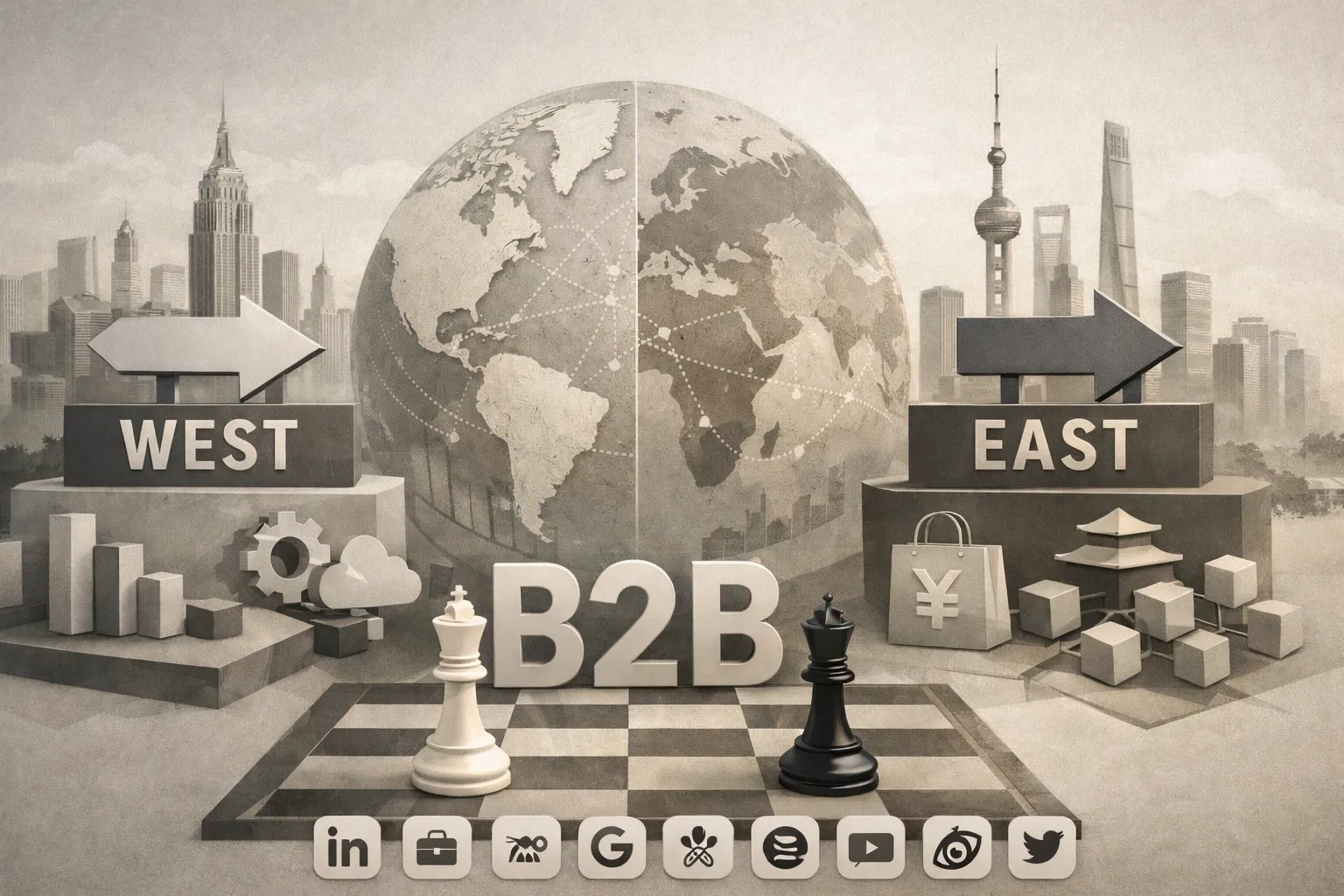
To help Chinese B2B teams utilize AI more effectively, Linkexis has developed a standardized localized workflow. The core of this process is not about generating text, but about reconstructing logic.
Step 1: Value Extraction
In most Chinese marketing copy, the core values are often encapsulated in a large number of “background descriptions” and “company honors”. At this stage, we use AI to remove all “modifiers” and “redundant information”, and only extract the core “pain point solution result” logic.
- Goal: Ensure that the value of your product remains consistent even without any modifications.
Step 2: Intent Mapping
Western buyers have a strong habit of independent research. They visit your website or view your LinkedIn updates not to be “marketed”, but to find “evidence”.
Through AI, we can targetCharacteristics of Western Digital ChannelsRefactor the content. For example, transforming a 2000 word Chinese company profile into three “question and answer” modules tailored to different business scenarios to adapt to the trend of Generative Engine Optimization (GEO).
Step 3: Platform Refinement
The final step is to polish the language. In this step, we use AI's Persona Setting function to adjust the tone for different platforms.
- LinkedIn: The tone should lean towards professionalism and insight driven (Thought Leadership).
- Google Ads: The tone should be extremely concise and emphasize action orientation.
- Official website content: Must comply withSEO and GEO Standards in Western MarketsEnsure that the brand still maintains high visibility in the era of AI search.

5. Conclusion: Empowerment is superior to outsourcing
Many companies“ first reaction when facing pressure to go global is to seek external translation companies or marketing agents. However, if the internal team of a company does not have the ability to identify ”cultural differences“ and utilize AI for ”value transformation," this growth is destined to be unsustainable.
Outsourcing growth often means losing control over the brandTrue global competitiveness comes from an internal team's deep understanding of the underlying logic of the Western market. The emergence of AI has made the construction of this ability unprecedentedly fast.
Linkexis always insists that it is better to teach companies how to fish than to give them fish. We pass throughDeep empowerment trainingHelp Chinese B2B teams master AI tools and establish an internal “cultural engine”. This is not just about translating a few articles, but also about fundamentally changing the way businesses communicate with global buyers.
In today's increasingly fierce global competition, successful B2B enterprises are no longer just “Made in China”, but should also be “globally understood”.
Reflection and Summary:
- Are your marketing materials translating “Chinese characters” or translating “value”?
- Does your team have the ability to use AI as a cultural bridge?
- In today's world dominated by AI recommendation algorithms, can your brand be easily recognized by Western buyers' logical systems?
If you wish to gain a deeper understanding of how to enhance your team's global marketing capabilities through AI empowerment, please feel free to contact usContact UsLearn more detailed information about B2B strategy and training.
Related article recommendations
When AI classifies you as a ”Chinese supplier”: How to reconstruct overseas narratives

Dark funnel: Why did overseas B2B buyers make a decision before contacting you